
You’re not necessarily hungry. You already ate dinner an hour ago. Yet there you are, standing in front of the fridge with the door open, staring at leftover pasta like it personally understands your problems. Most people have done it. Some of us do it more than we’d like to admit.
Food and emotions have always been tangled together. Long before wellness podcasts and calorie-counting apps existed, people cooked when they celebrated, baked when they grieved, and gathered around meals when life felt heavy. So emotional eating isn’t some strange modern failure. It’s human. Messy, sometimes frustrating, but human.
The trouble starts when food becomes the main way we handle stress, loneliness, boredom, or exhaustion. That’s when cravings stop feeling comforting and start feeling automatic. You eat to soothe yourself, then feel guilty afterward, which somehow makes you want another snack. Kind of cruel, really.
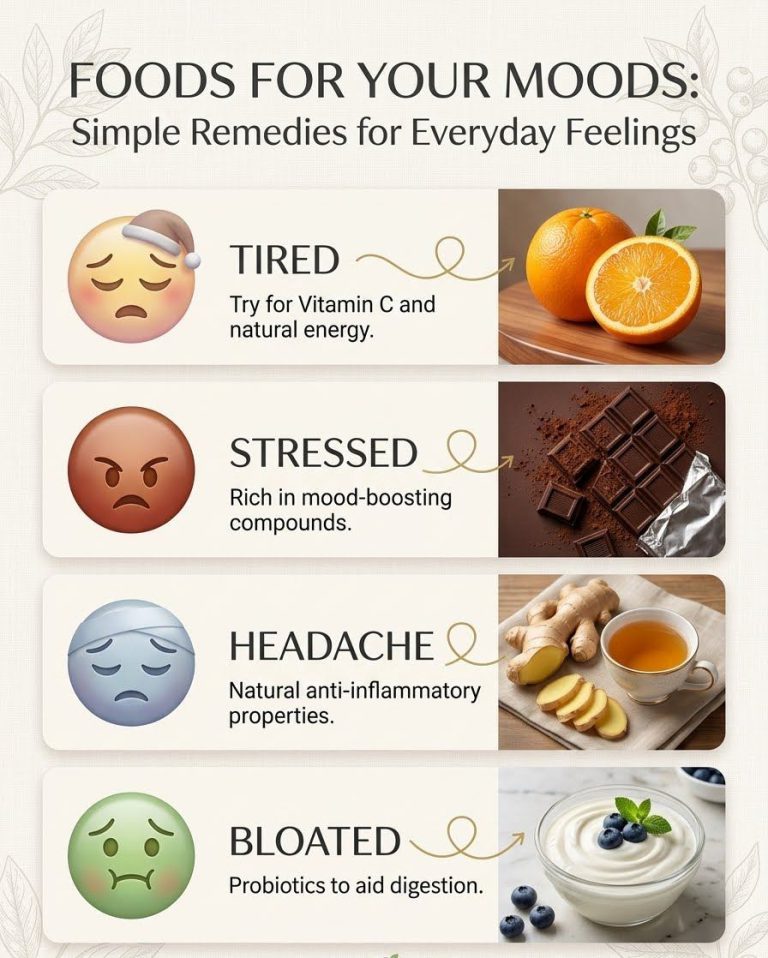
Still, not every craving is meaningless. Sometimes your body — and honestly your brain too — is trying to ask for support in the only language it knows. And weirdly enough, certain foods really can help stabilize mood, calm the nervous system, or make rough days feel a little more manageable.
Not magically. Not overnight. But enough to matter.
Why Emotions Send Us Looking for Snacks
Here’s the thing nobody explains very well: emotional eating usually isn’t about weakness. It’s chemistry mixed with habit, memory, stress, and convenience.
When people feel overwhelmed, the brain looks for relief fast. Foods high in sugar or fat trigger dopamine, the little reward chemical that says, “Ahhh, yes, this feels better.” Stress also pushes cortisol levels higher, and cortisol has a habit of making people crave salty, comforting, carb-heavy foods. Which explains why nobody stress-craves plain lettuce.
The brain wants relief. Quick relief.
And sometimes food works for a minute. That’s why the pattern sticks.
But once you start paying attention to what you crave during certain moods, things get interesting. Certain foods tend to help particular emotional states more than others. It’s not some mystical wellness trick. A lot of it comes down to nutrients affecting neurotransmitters, blood sugar, and the nervous system.
So let’s talk about it — the real-life version, not the sterile textbook version.
When Stress Hits Hard, Dark Chocolate Usually Wins
Continued On Next Page
ADVERTISEMENT
ADVERTISEMENT

