
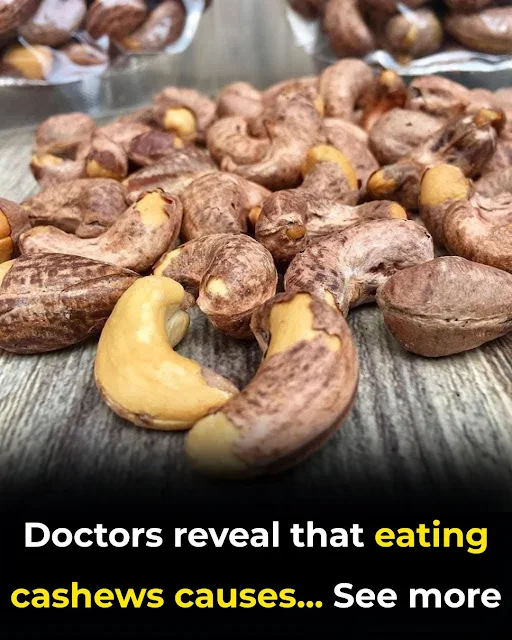
They’re creamy, satisfying, and easy to snack on by the handful. But cashews aren’t just delicious—they’re a genuine nutritional powerhouse. When eaten regularly in the right portions, doctors and nutrition experts say cashews can spark meaningful changes in your heart, metabolism, brain, and overall health.
Here’s what actually happens to your body when you make cashews a regular part of your diet.
First, What’s in a Cashew?
One ounce of cashews (about 18 nuts, or a small handful) contains:
| Nutrient | Amount | % Daily Value |
|---|---|---|
| Calories | 160-170 | — |
| Total fat | 13g | 20% |
| Protein | 4-5g | 9-10% |
| Carbohydrates | 9-10g | 3% |
| Fiber | <1g | 3% |
| Copper | 0.6mg | 67% |
| Magnesium | 73mg | 17% |
| Manganese | 0.2mg | 9% |
| Phosphorus | 139mg | 11% |
| Zinc | 1.6mg | 14% |
| Iron | 1.7mg | 9% |
| Vitamin K | 9.8mcg | 8% |
Key takeaway: Cashews are particularly rich in copper (nearly 70% of your daily needs in one serving), magnesium, and healthy monounsaturated fats .
What Happens to Your Heart
1. Cholesterol Levels May Improve
Despite having slightly more saturated fat than almonds or pistachios, most of the fat in cashews is heart-healthy monounsaturated and polyunsaturated fats .
The research: A 2017 study found that people who ate cashews instead of potato chips had lower total and LDL (“bad”) cholesterol levels . A 2020 meta-analysis also suggested that cashew consumption may reduce triglycerides .
What doctors say: “Cashews can definitely be part of a heart-healthy nutrition pattern when eaten in the right portions,” says Grace A. Derocha, RD, a spokesperson for the Academy of Nutrition and Dietetics .
2. Blood Pressure May Drop
Continued On Next Page
ADVERTISEMENT

