
-
The Brine (Don’t skip this!): Place your chicken pieces in a large bowl or zip-top bag. Pour the buttermilk and spices over them. Refrigerate for at least 4 hours (overnight is best). This breaks down the proteins and ensures every bite is seasoned to the bone.
-
The Dredge Station: In a large shallow dish, whisk together the flour, cornstarch, and spices.
-
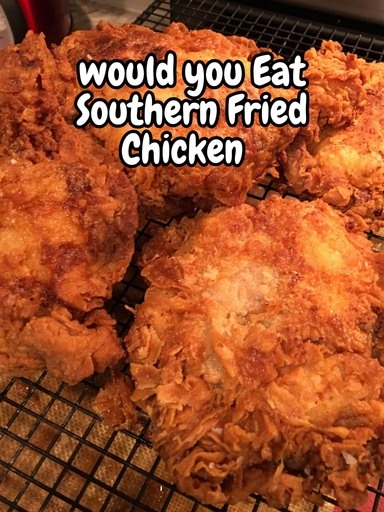
The “Crumb” Secret: Take 2–3 tablespoons of the buttermilk brine and drizzle it into the flour mixture. Use a fork to stir it in until tiny “clumps” form in the flour. These clumps will stick to the chicken and create those crispy “nooks and crannies.”
-
The Double Coating: Take a piece of chicken from the brine, let the excess drip off, and press it firmly into the flour. Flip it and press again—you want it thickly coated. Shake off the excess and place the chicken on a wire rack for 10 minutes. This “sets” the breading so it doesn’t fall off in the oil.
-
The Fry: Fill a heavy Dutch oven or cast-iron skillet with about 2 inches of oil. Heat to 350°F.
-
The Sizzle: Carefully add 3–4 pieces of chicken (don’t crowd the pan!). The temperature will drop; try to keep it around 325°F during cooking.
-
Dark meat (thighs/legs): 12–15 minutes.
-
White meat (breasts/wings): 8–12 minutes.
-
-
The Drain: Once the internal temperature reaches 165°F and the crust is deep golden brown, remove and drain on a wire rack (not paper towels, which can make the bottom soggy).
3 Rules for Fried Chicken Success
-
The Oil Temperature: If the oil is too cold, the chicken will be greasy. If it’s too hot, the skin will burn before the inside is cooked. Use a thermometer!
-
The “Cast Iron” Advantage: A cast-iron skillet holds heat better than any other pan, which helps the oil temperature recover faster after you add the cold chicken.
-
The Rest: Let the chicken rest for 5–10 minutes before eating. This allows the juices to redistribute and the crust to fully crisp up.
ADVERTISEMENT

