
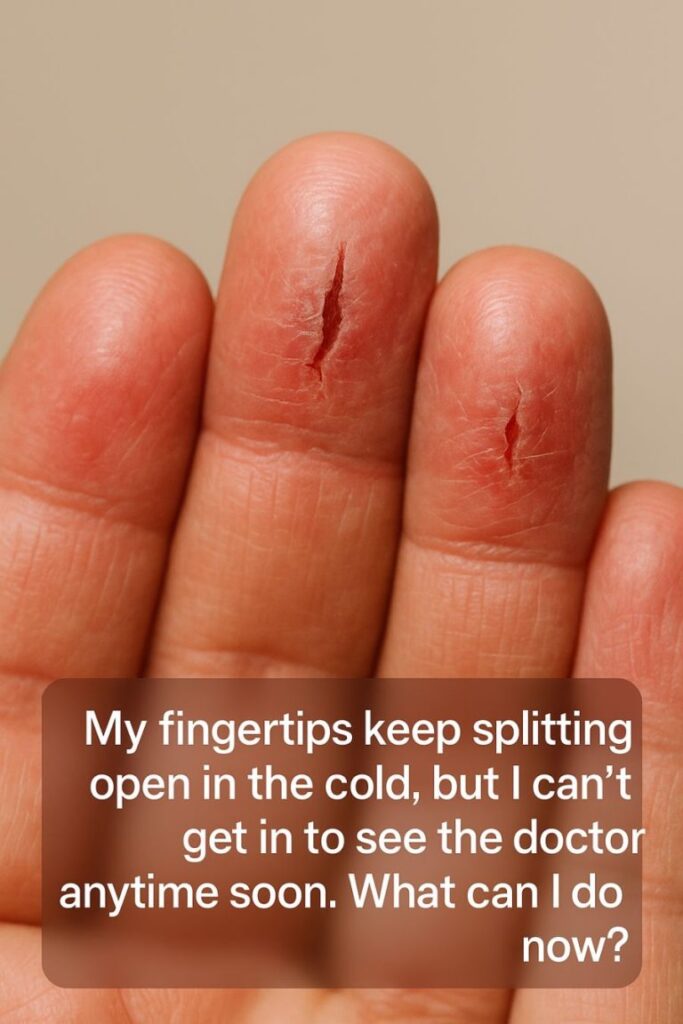
Before applying anything, gently wash the area with lukewarm water and mild soap.
Avoid:
- Hot water
- Fragranced soaps
- Harsh scrubs
Pat dry carefully—don’t rub.
Then seal the crack using a thick occlusive like:
- Petroleum jelly
- Thick healing balm
- Fragrance-free ointment
This creates a protective barrier and helps reduce moisture loss.
The “Superglue Hack”: When It May Be Reasonable
Some people use medical-grade liquid adhesive (skin glue) for shallow cracks.
If used, follow these guidelines:
- Only on clean, dry skin
- Only for small, non-infected cracks
- Apply a very thin layer
- Do not use on deep wounds
This method can temporarily hold the skin edges together to reduce pain while healing begins.
It is not a replacement for medical care if the wound is severe.
Bandage Smartly
For cracks that reopen with movement:
- Use liquid bandage for small splits
- Use soft adhesive bandages for deeper cracks
- Avoid tight wrapping
Change dressings daily or if they become wet.
Protection reduces friction and allows skin to repair.
The “Moisture Sandwich” Method
Layering products properly can improve hydration.
- Apply a humectant (like glycerin-based lotion).
- Follow with a rich cream to support the barrier.
- Seal with petroleum jelly or thick balm.
This layering helps draw moisture in and lock it there.
Continued On Next Page
ADVERTISEMENT

