
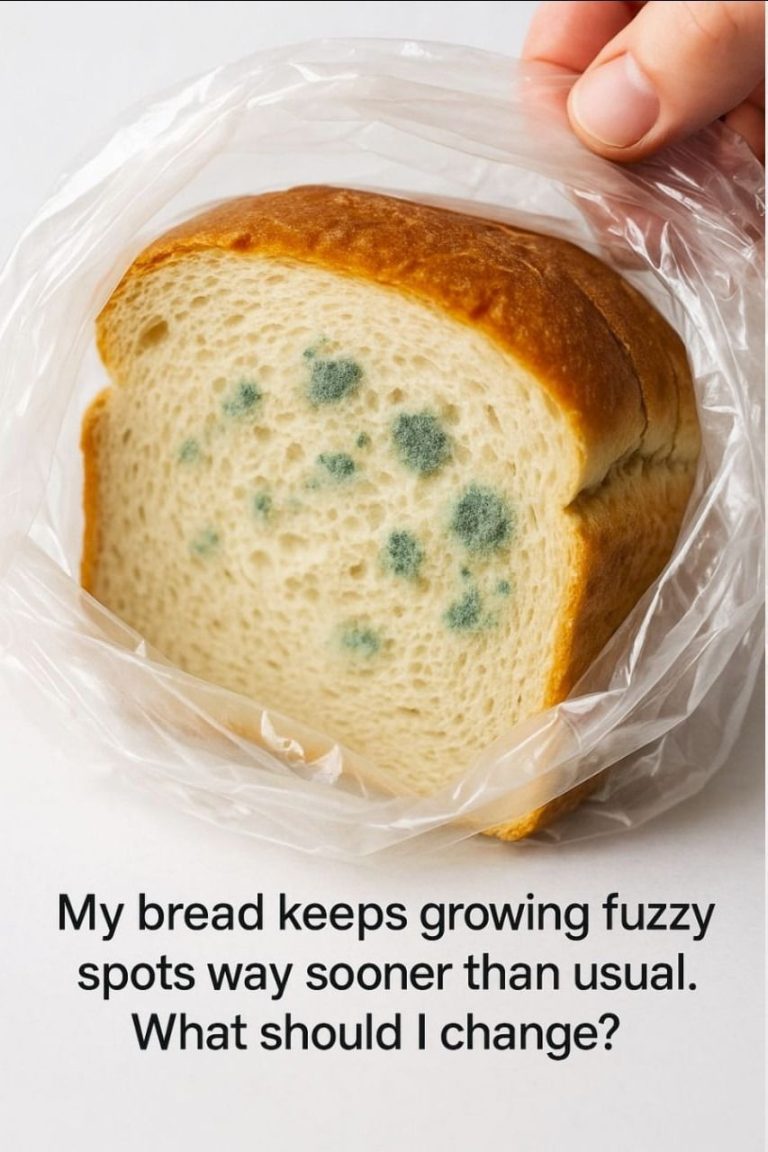
High humidity levels create the perfect breeding ground for mold. Bread stored in areas with humidity levels above 60% can develop mold much faster. To combat this, use a dehumidifier in your kitchen or pantry to keep the air dry. Additionally, avoid storing bread in areas where steam or moisture is prevalent, such as near a sink or stove. Keeping the humidity in check can drastically slow down mold growth.
Stop Storing Bread on or Near the Fridge and Dishwasher
Both refrigerators and dishwashers are sources of heat and moisture, which can increase the likelihood of mold growth. The top of the refrigerator is often warm due to the motor, and the dishwasher releases steam and humidity when in use. Ensure that bread is stored away from these appliances to minimize exposure to heat and moisture. A dedicated bread box or a cool, dry cabinet can be a better storage option.
Avoid Cross-Contamination From Cutting Boards and Hands
Mold spores can easily transfer from contaminated surfaces to fresh bread. Always use a clean cutting board and knife when slicing bread. Wash your hands before handling bread to prevent transferring any spores. If you suspect that a cutting board might be harboring mold, sanitize it thoroughly with a vinegar solution or in the dishwasher.
Choose Longer-Lasting Breads and Watch the Ingredient List
Continued On Next Page
ADVERTISEMENT
ADVERTISEMENT

