
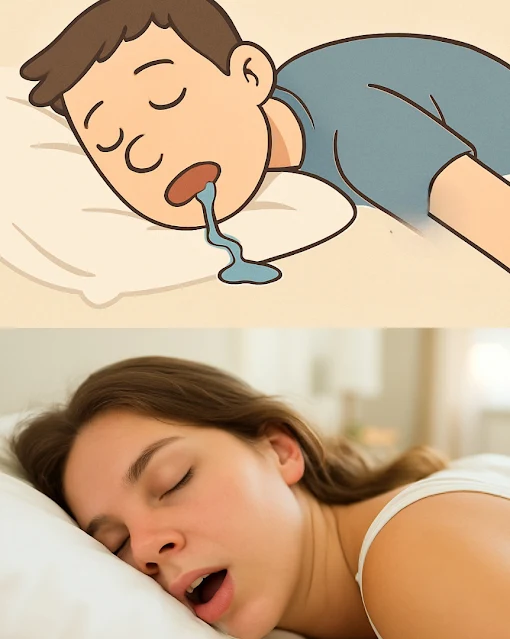
What it is: Stomach acid flows back into your esophagus, especially when lying down.
Why it causes drooling: Acid reflux triggers increased saliva production as your body tries to neutralize the acid. This excess saliva can lead to drooling.
Other signs:
-
Heartburn
-
Sour taste in mouth upon waking
-
Chest pain
-
Chronic cough
-
Hoarseness
What to do: Talk to your doctor about acid-reducing medications and lifestyle changes like avoiding late meals.
3. Allergies and Sinus Issues
What they are: Chronic allergies, sinus infections, or nasal congestion.
Why they cause drooling: Blocked nasal passages force you to breathe through your mouth at night. Mouth breathing allows saliva to escape more easily.
Other signs:
-
Stuffy or runny nose
-
Sneezing
-
Itchy eyes
-
Post-nasal drip
-
Snoring
What to do: Treat underlying allergies with antihistamines, nasal sprays, or allergy shots. Use a humidifier at night.
4. Neurological Conditions
Several neurological disorders can affect swallowing and muscle control:
-
Parkinson’s disease – Affects muscle control, including swallowing
-
Stroke – Can weaken facial muscles and impair swallowing
-
ALS (Lou Gehrig’s disease) – Progressive muscle weakness
-
Cerebral palsy – Affects muscle coordination
Why they cause drooling: These conditions can weaken the muscles that control swallowing and keep your mouth closed.
Other signs: Vary by condition but may include difficulty swallowing, slurred speech, muscle weakness, or tremors.
What to do: If you have other neurological symptoms, see a doctor promptly.
5. Enlarged Tonsils or Adenoids
What it is: Enlarged tonsils or adenoids can partially block the airway.
Why it causes drooling: The blockage forces mouth breathing and can interfere with swallowing.
Other signs:
-
Loud breathing
-
Snoring
-
Difficulty swallowing
-
Frequent sore throats
-
Ear infections
What to do: An ENT specialist can evaluate and recommend treatment, which may include removal.
6. Dental Issues or Ill-Fitting Dentures
Continued On Next Page
ADVERTISEMENT

