
-
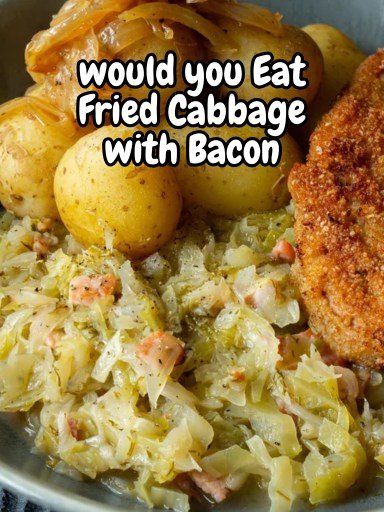
Render the Bacon: In a large skillet (cast iron is best!), cook the bacon over medium heat until it’s perfectly crispy. Use a slotted spoon to remove the bacon bits and set them aside on a paper towel, but leave all that liquid gold (fat) in the pan.
-
Sauté the Base: Add the onion to the bacon fat. Cook for 3–5 minutes until it starts to soften and turn translucent. Stir in the garlic and cook for just 30 seconds until you can smell it.
-
The “Fry” Phase: Add the cabbage to the pan in batches if you have to. It will look like too much at first, but it wilts down significantly. Stir to coat every ribbon in the bacon fat.
-
Season & Caramelize: Sprinkle in the sugar, paprika, salt, and pepper. Cook uncovered, stirring every few minutes, for 12–15 minutes.
Note: Don’t stir too much. You want the cabbage to sit against the hot pan long enough to develop those sweet, charred brown spots.
-
The Finish: Once the cabbage is tender but still has a slight “bite” (not mushy!), stir the crispy bacon bits back in.
-
The Acid Kick: Taste it—if it feels too heavy, add a tiny splash of apple cider vinegar. It cuts through the fat and makes the flavors pop.
3 Tips for the Best Cabbage
-
Don’t Add Water: It’s tempting to add a splash of water to speed things up, but that will steam the cabbage instead of frying it. Patience leads to a better texture.
-
The “Flat” Cut: When slicing your cabbage, try to keep the pieces roughly the same size so they cook evenly. I like 1-inch squares or wide ribbons.
-
Salt Late: Cabbage releases a lot of water when salted. If you want a better sear, add the bulk of your salt toward the end of the cooking process.
ADVERTISEMENT

