
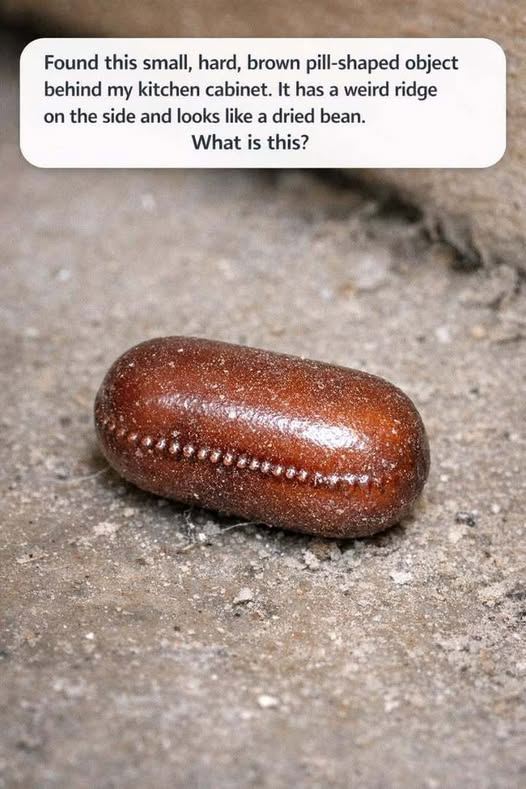
Cockroaches are very careful about where they leave their offspring. They look for spots that are dark, warm, and close to a food or water source. In a typical home, you should check:
- Behind or underneath kitchen cabinets.
- The warm gaps behind refrigerators, stoves, and dishwashers.
- Inside the corners of pantry shelves.
- Deep within cracks in the baseboards or walls.
5. Differentiating Between Pests and Plants
It is easy to get confused when you find small debris under a cabinet. Here is how to tell the difference:
- Beans and Seeds: These are usually very smooth and uniform. They do not have the structural “seam” or ridge that an egg case has.
- Rodent Droppings: Droppings are often more pointed at the ends and have a rougher, more irregular texture. They also do not have the symmetrical, pill-like shape of an ootheca.
6. Which Species Are Involved?
Different cockroaches produce different-looking cases.
- German Cockroaches: Their cases are usually light brown and quite small, but they carry a high number of eggs.
- American Cockroaches: These produce larger, darker brown cases.
- Oriental Cockroaches: These cases are often very dark, almost black, and look somewhat puffy.
7. The Meaning of Finding Just One Case
If you find one ootheca, it is a strong signal that adult cockroaches are nearby. Since these insects are nocturnal and very good at hiding, you might not see the adults during the day. However, the presence of an egg case confirms that the environment is suitable for them to breed. It is best to treat even a single find as a sign that a deeper inspection of the kitchen is needed.
8. What to Do Immediately
If you find a suspected egg case, do not touch it with your bare hands. Use a paper towel or wear gloves to pick it up.
- Place the object in a sealable plastic bag.
- Seal the bag tightly and take it to an outdoor trash bin immediately.
- Clean the area where you found it with a disinfectant or a mixture of soap and water. This removes any lingering scents that might attract other pests to the same spot.
9. Preventing Future Hatching
To keep your home clear, you must remove the things that cockroaches love: moisture and easy food. Fix any leaky pipes under the sink and keep your counters free of crumbs. Storing food in airtight containers is one of the most effective ways to make your kitchen less attractive to breeding pests.
10. Knowing When to Call the Professionals
If you only find one empty shell and no other signs of movement, you might be able to handle it with a deep clean. However, if you see multiple cases or notice “pepper-like” specks (which are often droppings), it might be time to call a professional. They have the tools to reach deep into the walls and cabinets where manual cleaning can’t reach.
11. Long-Term Kitchen Protection
Keeping a kitchen pest-free is a marathon, not a sprint. Regularly pulling out appliances to vacuum behind them and sealing up small gaps in your cabinetry with caulk can go a long way. By staying vigilant and knowing exactly what that “small, hard, brown pill-shaped object” is, you can take control of your home’s environment and keep it healthy for everyone.
ADVERTISEMENT

