
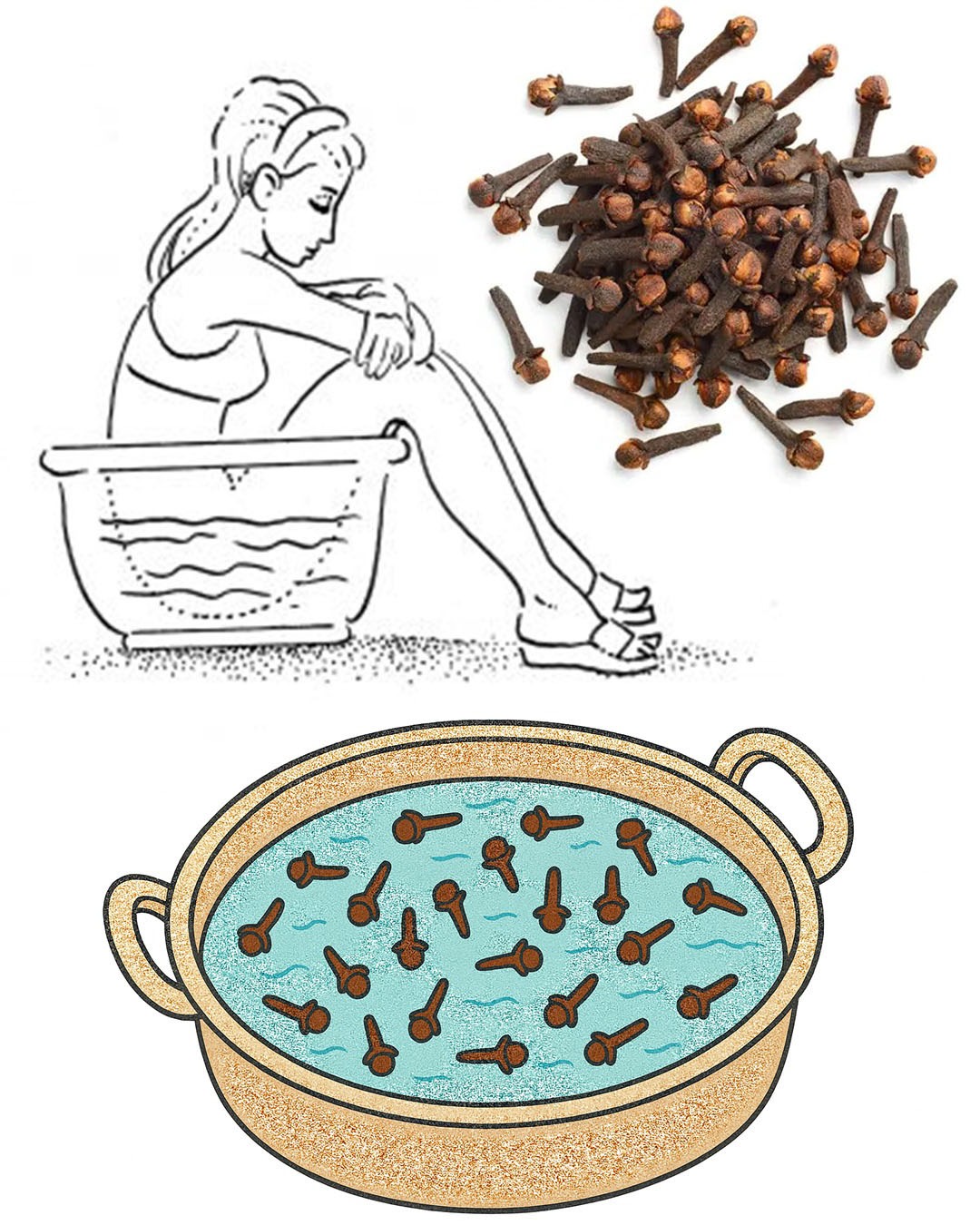
Steep cloves: Pour boiling water over whole cloves. Cover and steep for 15–20 minutes.
Strain thoroughly: Remove every clove—no residue. Let tea cool to body temperature.
Add to bath: Pour the clove tea into your sitz bath filled with warm (not hot) water.
Soak 10–15 minutes: No longer. Pat dry—don’t rub.
Discontinue immediately if you feel stinging, burning, or itching.
 Never use if you have:
Open wounds, stitches, or broken skin
Active yeast or bacterial infection
Known clove allergy (or sensitivity to spices like cinnamon)
 Safer, Soothing Alternatives for Sensitive Times
If you’re seeking comfort without risk, these OB-approved options are gentler and well-studied:
1. Plain Warm Water
The gold standard. Clean, calming, and zero irritation risk.
2. Baking Soda Bath (For Itching or pH Balance)
Add 1–2 tbsp food-grade baking soda to sitz bath water
Soothes irritation from mild yeast overgrowth or sweat
3. Witch Hazel Soak (For Postpartum Swelling)
Add ¼ cup pure, alcohol-free witch hazel to cool sitz bath
Reduces inflammation and numbs discomfort
4. Chamomile Tea Rinse (For Calming)
Steep 2 chamomile tea bags in 1 quart boiling water, cool, strain
Add to warm sitz bath for anti-inflammatory, relaxing effects
 Postpartum tip: Many hospitals provide peri bottles and sitz bath kits—use them as directed before adding herbs.
 Critical Safety Reminders
Continued On Next Page
ADVERTISEMENT

