
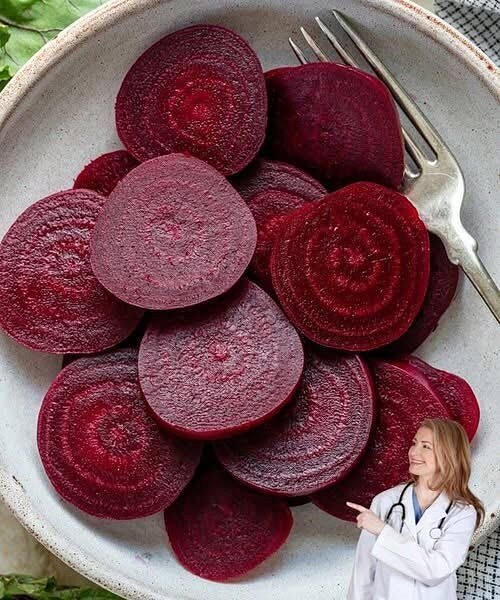
You’ve likely heard the claim: “Beets are a superfood.” While that label is often overused, beets genuinely deserve the praise. Rich in antioxidants, natural nitrates, fiber, and folate, they offer real, measurable benefits for heart health, brain function, and even physical performance.
The Beetroot Upgrade: What Doctors Say Really Happens When You Eat Beets
But let’s cut through the hype. What does science actually say about beets—and what belongs in the realm of wellness myths?
 7 Evidence-Based Benefits of Beets
1. Helps Lower Blood Pressure—Quickly
How it works: Beets contain nitrates that convert into nitric oxide, a compound that relaxes blood vessels.
What research shows: A 2013 study found that drinking 250 ml (about 8 oz) of beet juice reduced systolic blood pressure by 4–10 mmHg within 3–6 hours.
 Best for: People with elevated blood pressure (as a support, not a replacement for medication).
2. Enhances Athletic Performance
How it works: Nitric oxide improves how efficiently muscles use oxygen.
What research shows: Cyclists who consumed beet juice before a time trial rode nearly 3% faster while using less oxygen. Similar benefits have been observed in runners, swimmers, and older adults.
Tip: Consume beets 2–3 hours before exercise for best results.
3. Supports Brain Health
How it works: Increased nitric oxide boosts blood flow to the frontal lobe, which plays a role in memory and decision-making.
What research shows: Older adults who drank beet juice displayed brain activity patterns more similar to younger adults during cognitive tasks.
Helpful for: Aging adults and students facing heavy mental demands.
4. Fights Inflammation and Oxidative Stress
Continued On Next Page
ADVERTISEMENT

