
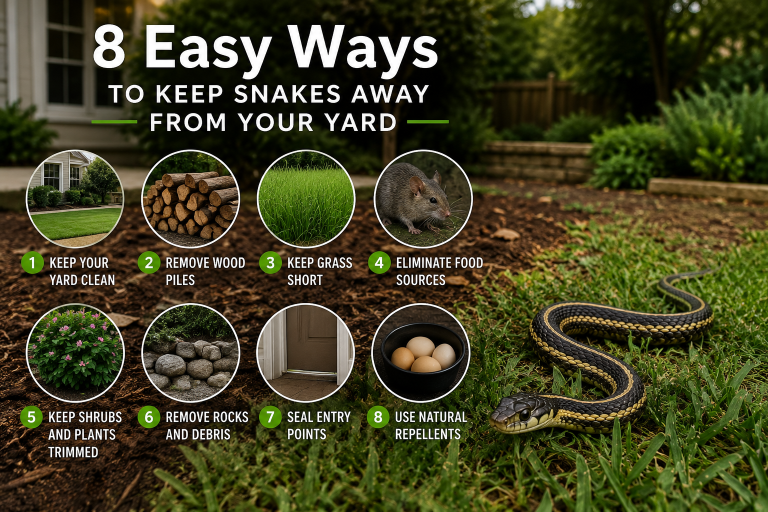
Snakes can squeeze through openings as small as a quarter!
Do this:
Inspect your home’s foundation, garage doors, and crawl spaces
Seal cracks with caulk, steel wool, or mesh
Install door sweeps on exterior doors
5. Use Natural Repellents (With Realistic Expectations)
Some scents may deter snakes—but results vary.
Try these (reapply after rain):
Clove or cinnamon oil (mix 10–15 drops with water in a spray bottle)
White vinegar around perimeter edges (especially near water features)
Garlic or onion spray (blend, strain, and spray)
Avoid mothballs, ammonia, or fake owls—they’re ineffective, toxic, or cruel.
6. Maintain a Clean, Tidy Yard
A clutter-free yard = fewer places to hide.
Do this weekly:
Rake leaves
Pick up garden tools
Keep compost bins sealed and away from the house
7. Encourage Natural Predators
Birds of prey help keep snake numbers in check.
Do this:
Install hawk or owl nesting boxes (on tall poles, away from trees)
Avoid using rodenticides—they poison the food chain
8. Be Mindful When Working Outside
Prevent surprise encounters:
Wear closed-toe shoes and gloves when gardening
Use a rake or stick to probe tall grass before reaching in
Teach kids to never touch or chase snakes
Important Reminder
Most snakes are non-venomous and beneficial—they eat pests like rodents and insects. If you see one, give it space. It will likely move on within hours.
If you live in an area with venomous snakes (like rattlesnakes, copperheads, or coral snakes), focus on habitat reduction—not killing. Prevention is safer for you, your pets, and local ecosystems.
Final Thought
“A snake-free yard isn’t about fear—it’s about smart stewardship.”
By removing what attracts them, you create a space that’s comfortable for you—and simply uninteresting to snakes.

